Sunday, February 2, 2014

Making Realistic Fireworks Photos

Last year, I experimented with my Fourth of July fireworks photos, shooting some of them like a typical photograph, while, in others, I played with shifting focuses while the shutter was open. Having the opportunity to view a city filled with public and private firework displays that rivaled each other for inventiveness and sheer firepower meant that I just had to go with straight-up, vanilla, long exposure firework photos. This isn't exactly a challenge - it's all about framing and hoping for the lucky combination of colors and shapes.

16mm f/20, ISO 320, 20 second exposure

I decided to use my wide-angle Tokina lens, which appears to be the best wide-angle lens out there for a DX (non-full frame) camera. Sure, the Nikon 14-24mm f/2.8 (Part of the Nikon "Holy Trinity") is a far superior lens, but it's made for FX (full frame) cameras. That extra $1,500 results in a lot of wasted glass, since the sensor won't be physically seeing all that the lens sees. The Tokina is simple to set up for these kinds of shots - pop it into manual focus and set the focus to infinity.

Braced the tripod against my body to get this 3 second exposure. I wasn't
in a good position to get a perfect silhouette with the fireworks
Of course, for long exposures like these (10-20 seconds was where most of my shots fell), you had better have a tripod. A cable release is ideal, especially when you're sitting still for 45 minutes in freezing temperatures! Since this is me we're talking about, I left my cable release sitting on my desk. But, fear not! You can still get vibration free photos by setting your camera on a 2 second delay from when you press the shutter release. Technology to the rescue of the forgetful!


Equipment Used

Nikon D7100 Camera
Tokina 11-16mm f/2.8 lens
Velbon Tripod


Images

Monday, January 27, 2014

Higher ISOs; See That Wasn't So Hard - Part Two

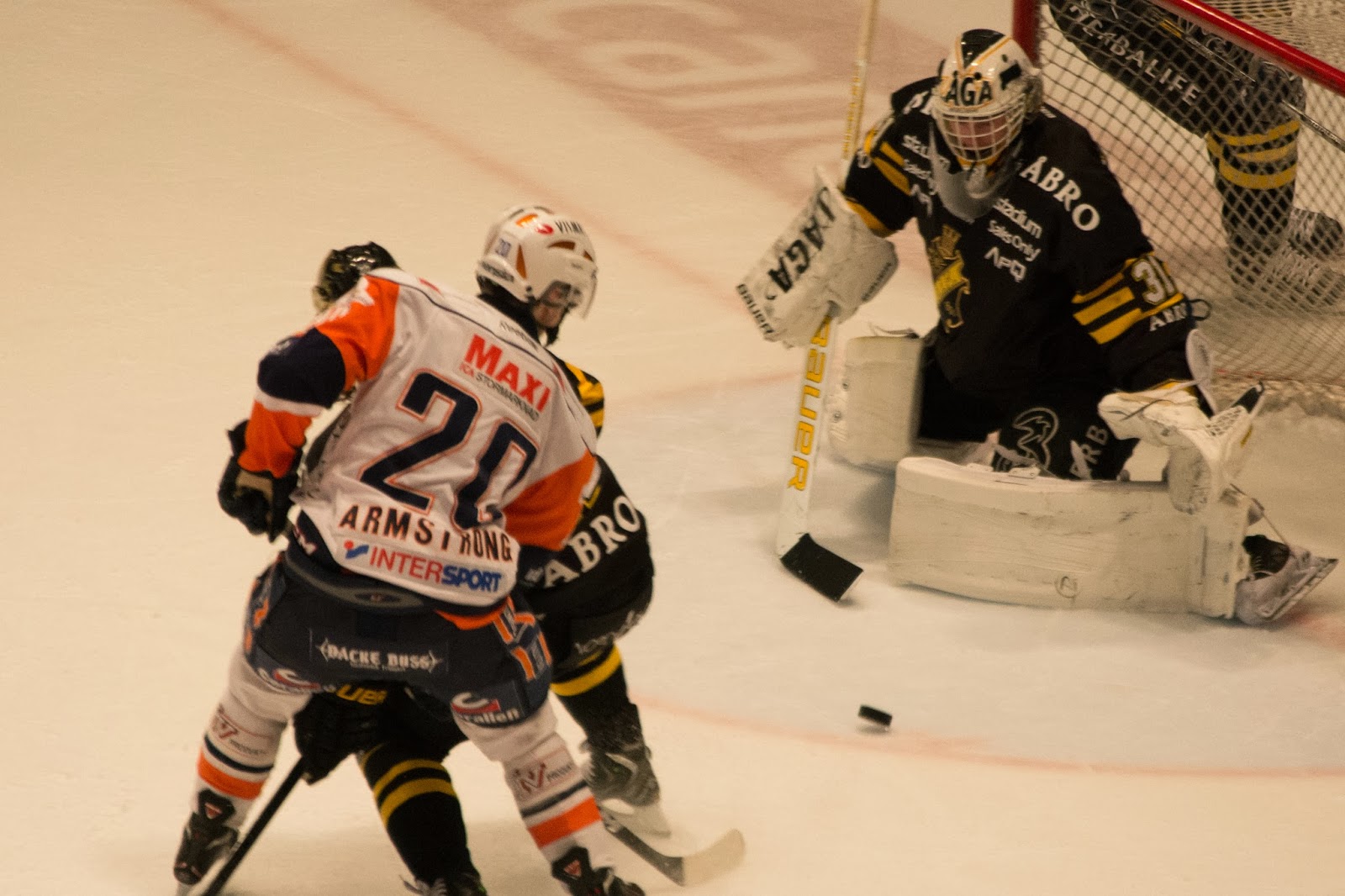
In my last post, I talked about getting used to trusting the ISO processing of my camera. Well, I have finally embraced the goodness of letting my camera use its power to overcome my relatively cheaper zoom lens and its smaller aperture. There isn't much to say on this, other than, I went to a pair of hockey games and took my camera. The arena was small enough that I could easily take good photos with my lens, and then crop them without any real effort to make some nice looking action shots. But there was only one way to do that - accept a higher ISO setting. I did, and even with the cropping, I enjoyed the results. I think that I'm one step closer to completely trusting technology!

Equipment Used
Nikon D7100 Camera
55-200mm f/4-5.6 lens

Images


Thursday, January 9, 2014

Trust Your Camera's ISO Processing

Ever since I've begun digital photography, the noise created by high ISO settings has absolutely driven me batty. I love the crispness of the lowest ISO settings. Well, this creates trouble when you don't have a lens to get the image you want without cropping. Cropping makes the ISO noise more apparent - it's just that simple. This bit of obsessiveness on my part has really hurt my photography. I've kept myself shooting wide open, and letting the shutter speed drop too low for my subject when confronted with low light. This makes for bad photography!

I at least got over my fear of thick blacks in my photographs, as I talked about here. Aaron Zebrook really opened my eyes as to how you can use the darkness of your frame to make your photographs that much better. But, still, I've not pushed my camera. Here I have this incredible piece of technology, and I'm not asking it to even break a sweat. And, as a result, my photos just aren't that good without a boost from Lightroom. Even then, a lot of what I'm failing to do can't be rescued with software.

Since it's winter, a lot of my photography is being done in either terrible light (grey, cloudy skies), or in darkness. This has made me pretty frustrated, to be honest, because the things I want to shoot aren't only perfect for my 35mm f/1.8 lens. I like using my cheap zoom, which gets me down to f/5.6, and means I have to get my shutter speed up to around 1/250 just to keep a sharp shot. In this light, that's not happening - unless I learn to suck it up and trust my camera's ISO performance.

Equipment Used

Nikon D7100 Camera
35mm f/1.8 lens
55-200mm f/4-5.6 lens
Nikon MC-DC2 Cable Release
Velbon Tripod

Images


A zoo shot with the telephoto lens (100mm f/4.5), ISO bumped up to 400. This is cropped.
250mm, 1/200, f/5.6, ISO 800. That still wasn't enough, and I "over developed" the photo by a full stop in Lightroom.


200mm, 1/40, f/5.6, ISO 640. A little bit more of a challenge to keep the motion, keep the detail in flat light, and keep the camera steady!
What could have been an amazing shot - but focusing in the dark means manual focusing. I neglected to use Live View, and, as a result, this is out of focus.


Saturday, December 14, 2013

Shooting in Low Light - Welcome to Winter in Germany

This is sunset. Full daylight was only 20 minutes prior!
In the northern climes,daylight doesn't last for long. When the sun sets, it sets fast. When you're enjoying the traditional Christmas markets, filled with lights and internally lit stands, the lighting environment is positively nuts. Daylight, various types of artificial light - not a single setting in the camera is static between shots.

What do you want to expose for? Without additional
light, you have to choose
In order to make better photographs, as I walked through the market, enjoying all of the sights, sounds, smells, and people, I consistently had to adjust the ISO, shutter speed, f-stop, and white balance. Oh, the white balance. Want a nice shot of the architecture surrounding the market? One setting. How about the inside of one of the market stalls? Change that setting right up. The one nice thing is, if you're shooting in RAW, at least you can avoid the white balance issue, and deal with that in post processing. Honestly, that would be the best way to handle things for the beginning photographer, like myself. Nailing the manual camera settings is what is most important. The white balance feel comes with time - just as the ISO, shutter speed, and f-stop feels come with time.

Unless you're bringing your own lighting in situations like these, not only are you composing the shot in terms of what appears within the frame, but you are also composing the light within the frame. In the above shots, I could have taken an identically framed photo, but composed the technical settings in such a way that the subject of the photo completely shifts. What it boils down to are the artistic sensibilities of the photographer.

Equipment Used

Nikon D7100 Camera
35mm f/1.8 lens


 Images

Sunday, December 1, 2013

Always Prepared - It's Not Just for Boy Scouts

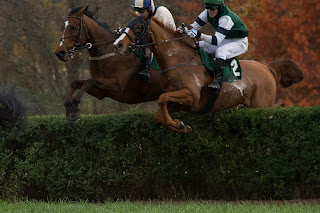
Horses approach a jump in the Montpelier Steeplechase
So I was recently invited to head down to the Montpelier, Virginia annual steeplechase horse race. A steeplechase isn't like a standard thoroughbred horse race where they simply go around a track. Oh, no, a steeplechase has horses going over (and sometimes, by mistake, through) a variety of man-made jumps on a course that can be upwards of 1.5 miles long. But, not every race uses every jump, or even the same jumps. Throughout the day, each race makes use of different portions of the course. Per usual, I brought along my camera gear, hoping to experience a great day. One thing I did not pack, however, was a schedule of the day's racing. Now, were I professionally shooting this event, this would be an unforgivable sin. If you're being paid to produce photos of an event, you damn well better know what is happening and when. How else can you plan for the best shots?

This may seem like simple advice, even for the amateur photographer just going out to have fun (me). Well, let me tell you - over the course of several hours, schedule delays, and enjoying not just the racing but the infield sites, it is quite easy to lose track of things. When you lose track of things? You end up not knowing which event is up next, nor which jumps they will (or won't) utilize. The below photo is precisely what happens when you miss a chance to get a photo as several thousand pounds of horses come thundering by, less than a foot away.
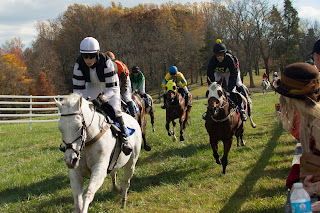
Surprise! They're on the rail for this race!

The horses did two circuits for this race. As a result of having my telephoto lens ready on the first circuit, I had to choose which lens to use for the only remaining one - 35mm or 11-16mm. As you can see, I went with my 35mm lens, and I'm fairly pleased with the result. A shot just a split second later would've captured more energy, I feel, but I'm pleased. I'll never know what the 16mm photograph would look like, since I never had the chance. So, the lesson? Be prepared!
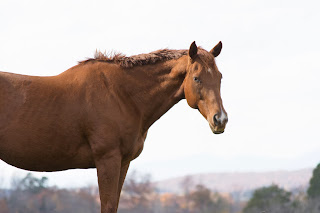
This horse's eyes were absolutely mesmerizing

A perfect action shot... until I chopped off the jockeys' heads


Equipment Used

Nikon D7100 Camera
55-200mm f/4-5.6 lens
35mm f/1.8 lens
B+W 52mm circular polarizer filter


 Images